


10 Common Plumbing Issues and How to Fix Them
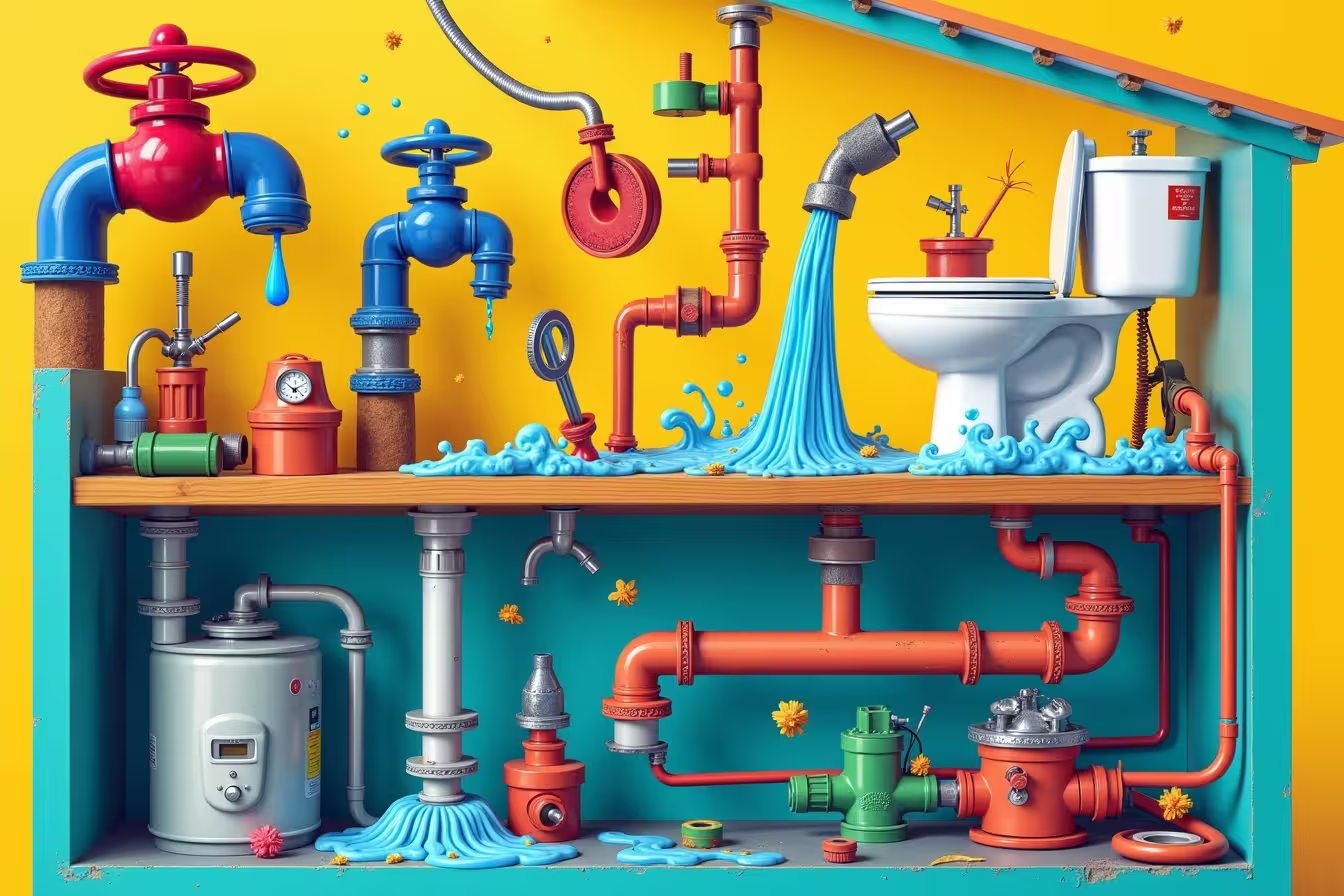
As homeowners, we've all experienced those frustrating moments when our plumbing decides to act up. Whether it's a leaky faucet disturbing your peace or a clogged drain ruining your morning routine, plumbing problems can be a real headache. But fear not! In this comprehensive guide, we'll explore the 10 most common plumbing issues and provide you with practical solutions to fix them. By the end of this article, you'll be equipped with the knowledge to tackle these plumbing challenges head-on, saving you time, money, and stress.
1. Leaky Faucets: The Persistent Drip

One of the most common plumbing problems that homeowners face is the annoying drip, drip, drip of a leaky faucet. Not only can this constant sound drive you crazy, but it can also waste a significant amount of water over time, leading to higher water bills. The good news is that fixing a leaky faucet is often a straightforward DIY plumbing fix that you can tackle with a few simple tools.
The primary culprit behind a leaky faucet is usually a worn-out washer. This small rubber component forms a seal when the faucet is turned off, preventing water from escaping. Over time, these washers can become hardened, torn, or dislodged, allowing water to seep through.
To fix a leaky faucet, follow these steps:
- Turn off the water supply to the faucet.
- Remove the faucet handle by unscrewing the decorative cap and loosening the screw underneath.
- Use a wrench to remove the packing nut and pull out the stem.
- Locate the washer at the bottom of the stem and replace it with a new one of the same size and type.
- Reassemble the faucet and turn the water supply back on.
Remember, different faucet types (compression, cartridge, ball, or ceramic disk) may require slightly different approaches. If you're unsure about the type of faucet you have or feel uncomfortable with the repair, it's always best to consult a professional plumber.
2. Clogged Drains: The Slow Water Escape
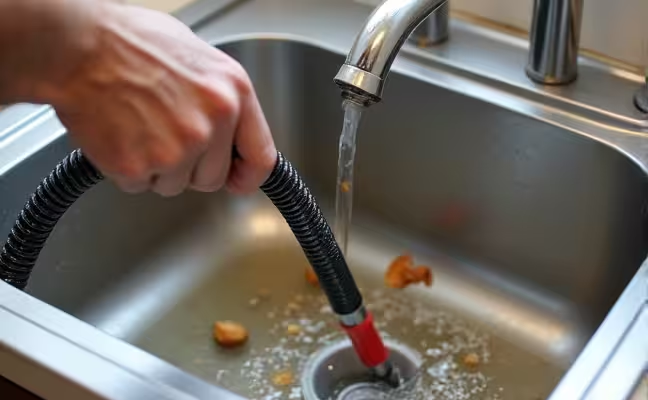
Clogged drains are another prevalent plumbing issue that can disrupt your daily routine. Whether it's in your kitchen sink, bathroom sink, or shower, a clogged drain can be a real nuisance. The usual suspects behind these clogs are hair, soap scum, food particles, and other debris that accumulate over time, creating a blockage that prevents water from flowing freely.
Here are some effective methods to tackle clogged drains:
Plunger Method
For minor clogs, a plunger can work wonders. Ensure there's enough water in the sink or tub to cover the plunger's head. Place the plunger over the drain and create a tight seal. Push and pull vigorously several times to create suction and dislodge the clog.
Plumber's Snake
For more stubborn clogs, a plumber's snake (also known as an auger) can be highly effective. Insert the snake into the drain and turn the handle to guide it through the pipe. When you feel resistance, you've likely reached the clog. Continue turning the snake to break up the blockage or retrieve it.
Natural Remedies
For an eco-friendly approach, try pouring a mixture of baking soda and vinegar down the drain. Let it sit for about 30 minutes, then flush with hot water. This can help break down organic matter causing the clog.
Chemical Drain Cleaners
While effective, chemical drain cleaners should be used sparingly as they can damage your pipes over time. If you choose to use them, always follow the manufacturer's instructions carefully.
For severe blockages that resist these methods, you might need to disassemble the P-trap (the curved section of pipe under the sink) to remove the obstruction manually. If you're not comfortable with this level of plumbing repair, it's best to call a professional.
3. Running Toilets: The Silent Water Waster
A running toilet might not seem like a big deal, but it can waste hundreds of gallons of water per day if left unchecked. This common plumbing problem is often caused by issues with the flush mechanism inside the tank, particularly the flapper valve.
The flapper valve is responsible for controlling the water that passes from the tank to the bowl. When it doesn't seal properly, water continuously leaks into the bowl, causing the tank to refill repeatedly.
Here's how to fix a running toilet:
- Remove the tank lid and flush the toilet, watching the mechanism in action.
- Check if the flapper is sealing properly. If not, it may need to be cleaned or replaced.
- Inspect the chain connecting the flush lever to the flapper. If it's too short or too long, it can prevent the flapper from sealing correctly.
- Adjust the float that controls the fill level. If it's set too high, water will continuously flow into the overflow tube.
If these steps don't solve the problem, you may need to replace the entire flush valve assembly. This is a more complex plumbing repair that might require professional assistance if you're not confident in your DIY skills.
4. Low Water Pressure: The Weak Flow Frustration
Low water pressure can turn a refreshing shower into a tedious chore and make simple tasks like washing dishes more time-consuming. This plumbing issue can have several causes, but one of the most common is a build-up of sediment and mineral deposits on faucet aerators and showerheads.
To address low water pressure:
- Start by cleaning the aerators on your faucets. Unscrew them and soak them in vinegar overnight to dissolve mineral deposits.
- For showerheads, either remove them for soaking or tie a plastic bag filled with vinegar around the showerhead overnight.
- If cleaning doesn't improve the pressure, check for any visible leaks in exposed pipes, as these can reduce water pressure.
- Ensure that the main water valve to your house is fully open.
If these steps don't resolve the issue, the problem might be more serious, such as a leak within your walls or underground, or a problem with the municipal water supply. In these cases, it's best to consult with a professional plumber to diagnose and fix the issue.
5. Leaky Pipes: The Hidden Water Damage Culprit
Leaky pipes are not just a nuisance; they can cause significant water damage to your home if left unchecked. These leaks often occur at pipe joints and are more common during colder months when water can freeze and expand within the pipes, causing them to crack.
For a temporary fix on a leaky pipe:
- Turn off the water supply to the affected area.
- Dry the pipe thoroughly.
- Apply epoxy putty or pipe repair tape to the leak, following the product instructions carefully.
- For pinhole leaks, a pipe repair clamp can be effective.
However, these are only temporary solutions. For a permanent fix, you'll likely need to replace the damaged section of pipe or its fitting. This is often a job best left to professional plumbers, especially if the leak is in a hard-to-reach area or involves complex pipe configurations.
6. Slow Filling Toilet: The Time-Wasting Wait
If your toilet tank takes an eternity to refill after flushing, it's not just an inconvenience – it's a sign that something's amiss with your plumbing. The most common cause of a slow-filling toilet is issues with the fill valve.
To address a slow-filling toilet:
- Check the water supply valve near the base of the toilet to ensure it's fully open.
- Inspect the fill valve in the tank for any debris that might be obstructing water flow. Clean it if necessary.
- Adjust the float arm or cup to ensure the tank fills to the correct level.
- If these steps don't work, you may need to replace the fill valve entirely. This is a relatively simple DIY plumbing fix that involves turning off the water supply, removing the old valve, and installing a new one.
Remember, a properly functioning toilet should refill within about a minute after flushing. If your toilet consistently takes longer, it's time to investigate and fix the issue to prevent wasted water and potential future problems.
7. Water Heater Issues: The Cold Shower Surprise
There's nothing quite as unpleasant as stepping into the shower, only to be greeted by a blast of cold water. Water heater problems are among the most disruptive plumbing issues, affecting everything from your morning routine to your dishwashing efficiency.
Common water heater problems and their solutions include:
No Hot Water
This could be due to a faulty thermostat or a broken heating element. Check the thermostat settings first. If they're correct, you may need to replace the heating element, which is a job best left to professionals unless you're very comfortable with electrical work.
Not Enough Hot Water
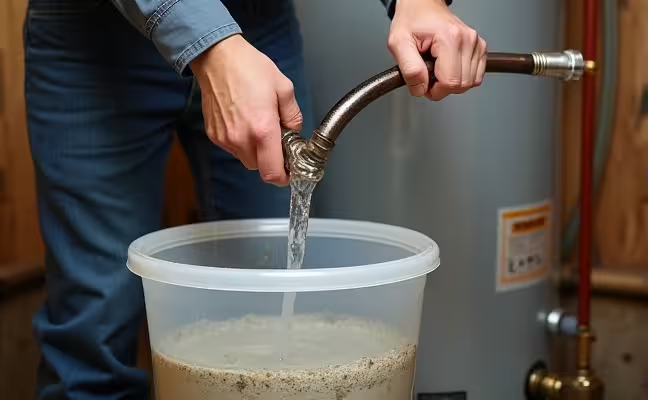
If you're running out of hot water too quickly, sediment buildup in the tank could be reducing its capacity. Flushing the tank can help remove this sediment. To do this:
- Turn off the power to the water heater.
- Connect a garden hose to the drain valve at the bottom of the tank.
- Open the valve and let the water flow until it runs clear.
- Close the valve, refill the tank, and restore power.
Strange Noises
Rumbling or popping sounds often indicate severe sediment buildup. Flushing the tank as described above can help, but if the problem persists, you may need to consider replacing the water heater.
Regular maintenance, such as annual flushing and checking the anode rod, can significantly extend the life of your water heater and prevent many common issues.
8. Garbage Disposal Jam: The Kitchen Sink Standstill
A jammed garbage disposal can bring your kitchen activities to a screeching halt. These handy appliances can easily become overwhelmed by too much waste or hard objects like bones or fruit pits.
To unjam a garbage disposal:
- Never attempt to clear a jam with your hand. Always disconnect the power first.
- Look into the disposal with a flashlight to identify any visible obstructions.
- Use pliers to remove any objects you can see and reach safely.
- For jams you can't see, use the wrench that came with your disposal (or a 1/4-inch Allen wrench) to manually turn the grinding plates from underneath the sink.
- Once the jam is cleared, press the reset button (usually red and located on the bottom of the disposal), restore power, and run water while testing the disposal.
To prevent future jams, always run cold water when using the disposal, avoid putting fibrous or starchy foods down it, and never overfill it. Regular cleaning with ice cubes and rock salt can also help keep your disposal in top shape.
9. Sewer System Backups: The Nightmare Scenario
Sewer system backups are among the most serious plumbing issues a homeowner can face. They're not just unpleasant; they can pose significant health risks. Signs of a sewer system backup include:
- Multiple drains clogging simultaneously
- Bad sewage odors coming from drains
- Water pooling around floor drains in the basement
- Gurgling sounds from drains when water is running
Due to the complexity and potential health hazards involved, sewer system backups almost always require professional help. The cause could be a blockage in the main sewer line, tree root intrusion, or even a collapsed sewer pipe.
While you wait for professional help:
- Stop using all water in your home to prevent further backup.
- Keep children and pets away from affected areas.
- If safe to do so, try to determine if the backup is limited to your property or if it's affecting neighboring homes as well, as this information can help the professionals diagnose the problem.
Regular sewer line inspections and prompt repair of any minor issues can help prevent major backups. Also, be mindful of what you flush or pour down your drains to avoid contributing to blockages.
10. Sump Pump Failure: The Basement's Last Line of Defense
For homes with basements, especially in areas prone to flooding, a sump pump is a crucial piece of equipment. When it fails, particularly during heavy rains, the results can be catastrophic. Common causes of sump pump failure include power outages, overwhelmed capacity, or simple wear and tear.
To maintain and troubleshoot your sump pump:
- Regularly test the pump by pouring water into the sump pit to ensure it activates and drains properly.
- Check the float switch for any obstructions that might prevent it from rising with the water level.
- Inspect the check valve to ensure water isn't flowing back into the sump after the pump shuts off.
- Consider installing a battery backup system for your sump pump to keep it running during power outages.
- If your pump is more than 7-10 years old, consider replacing it proactively before it fails.
If your sump pump fails during a critical time, such as during heavy rainfall, you may need to use a portable pump or wet vacuum to remove water manually while you wait for repairs or replacement.
Conclusion: Mastering Common Plumbing Problems
Understanding these common plumbing problems and their solutions can save you time, money, and stress. Many of these issues can be addressed with simple DIY plumbing fixes, but it's crucial to know your limits. When in doubt, or when dealing with complex issues like sewer backups or major pipe replacements, always consult with a professional plumber.
Regular maintenance is key to preventing many of these plumbing issues. By staying vigilant and addressing small problems promptly, you can avoid many of the larger, more expensive repairs. Remember, your home's plumbing system is complex and vital – treat it with care and respect, and it will serve you well for years to come.
As someone who's dealt with my fair share of plumbing headaches, I've found that having a reliable resource for finding local professionals is invaluable. That's why I love using simpleHome. It connects homeowners like us with skilled local professionals who can tackle even the toughest plumbing challenges. Whether you're facing a minor leak or a major plumbing emergency, simpleHome makes it easy to find the right expert for the job. It's been a real lifesaver for me, and I highly recommend checking it out for all your home maintenance needs.